An Introduction
There are lots of different types of factual programmes - Chat shows, reality TV, documentaries, and TV news bulletins are just a few examples. Depending on the type of programme, they can be distributed on a number of different platforms - like television, the cinema, DVD, and in some cases - the internet.TV News Programmes and TV documentaries follow quite differed codes and conventions. For example, we would expect TV News to be very statistical, organised, and balanced. Documentaries though, differ depending on the film-maker. They are more laid back, and often more entertaining that factual.
Documentaries are different, in the fact that they are more subjective. Documentary film makers will tend to persuade their audience their own personal point of view with very selective facts and figures. There are numerous types of documentaries; they are Expository, Observational, and Interactive.
Expository documentaries are the filmmakers revealing or investigating something. Much like Panorama. The show will usually give the audience some context into the subject(s) and then 'dig deeper' into the case.
An Observational documentary just observes. The subjects are aware that they are being watched, but they are mostly natural. There is of course, the possibility of the subjects putting on an act. Observational documentaries do not always have the chance to be subjective, as there are less voice-overs. The audience can make up their own mind.
In an Interactive documentary the film-maker will either be the subject, or spend their time with the subjects. Here, they can be more pushy, ask/answer more questions, share more opinions, and take the documentary where they choose. Just like Louis Theroux does in The Most Hated Family In America.
Although all 3 types of documentaries display real footage and facts, they all do it differently. They all have a 'beginning, middle and conclusive' narrative.
In order to make an accurate film, a documentary film-maker's sources need to be accurate. Ideally, documentaries should remain factual, fair, and objective - However, this is not always the case. Factual films should be factual - not turn into a promotional or hate-fueled film. They should document something as it is or was, not as it is or was seen by the film-maker. The viewers need to make up their own mind. Unlike television or radio news bulletins, there is nothing regulating film-makers into feeding it's audience bias opinions.
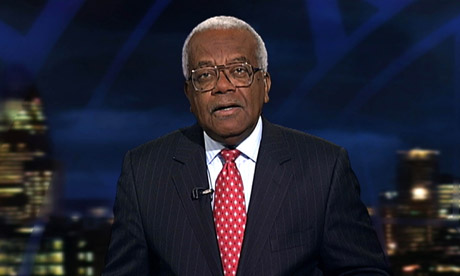
Television news broadcasts however, are way more accurate. The newsreaders are contractually obliged to write objective and balanced news queues. There will always be raw footage on screen, and a reporter will usually be at the scene of the event. News bulletins will often show graphics, statistics, and charts. In some stories, they may choose to interview people. Usually someone involved, or maybe an expert - just for their expert opinion.
The audience expect their factual programmes to be objective and partial because their sole aim is to be accurate and informative. The information must be respectable & trustworthy. The codes, conventions and guidelines of TV news bulletins help fulfil this.
Documentaries however are usually more subjective or bias - As they express the opinions of the filmmaker on the subject - sometimes subconsciously, but more often than not, they are aware of this. If someone makes a film about something, they must have a pretty strong opinion on it. Some film-makers will go certain lengths to twist their findings to back their own opinion.
TV News Bulletins - News at 10, Newsround, and 60 Seconds
Although TV news bulletins will always give you the information you need to know, different bulletins will deliver it to you in different ways. Here, we'll be looking at 3 very different shows and comparing and contrasting them.
I feel that the BBC News at 10 bulletin is aimed at middle aged, working class males. They are probably politically aware, or at least have a good understanding of politics. I think this because all of the stories in the bulletin have a huge lack in females. The clips in the intro show all male politicians - people in power. The mise-en-scene of the news room, and the language that the newsreader uses is all very formal, and they go into great detail.
The target audience for the BBC News round bulletin is very different in comparison to News at 10. The bulletin is aimed at young children, aged from around 5 to 11. There are many reasons as to why I can see this. First, it is shown on CBBC, a children's channel. They use lively colours and upbeat music. The newsreader is young, and isn't dressed as formal as a bulletin following codes and conventions should be. This is because this would be perceived as boring by the young audience. Every negative story also got twisted to sound positive. (i.e, there's a forest fire, BUT the fire brigade are dealing with it) It's their way of sugar coating everything for kids.
The 60 second Update bulletin is aimed at a completely different audience too - young females. I can tell this because the graphics and the background are purple. A colour usually associated with females. It's also quite fast. Everything is quite easy to remember. The stories covered are quite celebrity and gossip based. Typical girly things.
The Most Hated Family In America has a big problem regarding bias and opinion. Although there is no escaping the fact that every film-maker will always be at least slightly subjective, this film suffers from this just a little bit more than others. The whole world pretty much shares the same opinion of the Westboro Baptist church, and not in a good way. It's quite difficult to find a film-maker who can remain objective on most things, but more-so with this subject. Still, Louis Theroux manages to produce a very balanced documentary, considering.
Louis Theroux has since commented on the church, stating that the younger generation of followers are surprisingly nice, but pointed out his distaste for Fred Phelps in particular. This shows us that although he has an opinion, he tries to keep it out of the film for the purposes of being impartial.
There is minimal editing with this film. Due to the shock nature of this film, Theroux thought it be best to just show us the footage, rather than attempt to explain it. Theroux directly addresses the camera and voices over some clips when necessary. The Most Hated Family In America is just a standard participatory documentary - We are watching to see how Theroux, and outsider, gets along with the family.
Super Size Me is probably the most balanced film out of the three. Is it Morgan Spurlock just hating on fast food for an hour and a half? No. He states many times in the film that he enjoys it, and eating out three times everyday for a month is fun.
He visits and receives opinions and stats from many different specialists, doctors, and nutritionists. Spurlock films almost every meal, only 'Super-Sizes' his meals when asked, and takes many voxpops from a range of people. It's quite fair.
Spurlock is very objective when it comes to the subject of the film. Even before he experiences the drawbacks from fast food, he doesn't speak that badly of it, and seems to keep and open mind.
There is an underlying expectation of Spurlock and the audience that something bad is going to happen. It's almost the whole purpose of the film - to showcase what happens if you eat too much fast-food. Spurlock experiences mood swings, fat accumulating in his liver, a decreased sex drive, and heart palpitations. However, eating 3 McDonalds a day for a month is a bit on the extreme side.
To illustrate his points, Spurlock uses a number of different graphics and charts. When eating meals (and throwing them up) he uses a handheld camera, whilst addressing it directly, talking about how the food is making him feel. It's quite personal, and specific to him. It's accurate, but not entirely balanced, as he is the only person doing the experiment.
Bowling For Columbine is hands down the most bias documentary out of the three. Michael Moore very strong opinions on US gun laws, because he's a very opinionated person. Quite an angry film-maker, often passive aggressive. He's very forward with the people he speaks to.
For example, he practically ambushes Charlton Heston into an interview. Moore also has personal beef with KMart for selling gun ammunition. There is a montage showing a number of violent acts the US has committed, (dating back to 1953) concluding with the 9/11 attacks; hinting that he feels America has brought that on themselves. t's edited in such a way to make the audience resent the US. Moore uses selective editing to give the audience context and lean towards his side of the argument, or at least understand it.
Moore's camera crew also zoom in on his interviewee's (like Heston and the KMart ammunitions manager) so we can see their facial reactions.
The target audience for the BBC News round bulletin is very different in comparison to News at 10. The bulletin is aimed at young children, aged from around 5 to 11. There are many reasons as to why I can see this. First, it is shown on CBBC, a children's channel. They use lively colours and upbeat music. The newsreader is young, and isn't dressed as formal as a bulletin following codes and conventions should be. This is because this would be perceived as boring by the young audience. Every negative story also got twisted to sound positive. (i.e, there's a forest fire, BUT the fire brigade are dealing with it) It's their way of sugar coating everything for kids.
The 60 second Update bulletin is aimed at a completely different audience too - young females. I can tell this because the graphics and the background are purple. A colour usually associated with females. It's also quite fast. Everything is quite easy to remember. The stories covered are quite celebrity and gossip based. Typical girly things.
Comparing and Contrasting Documentaries
The three most recent documentaries that I have watched; The Most Hated Family In America, Supersize Me, and Bowling For Columbine, are all produced in very different ways by very different film-makers.
Louis Theroux has since commented on the church, stating that the younger generation of followers are surprisingly nice, but pointed out his distaste for Fred Phelps in particular. This shows us that although he has an opinion, he tries to keep it out of the film for the purposes of being impartial.
There is minimal editing with this film. Due to the shock nature of this film, Theroux thought it be best to just show us the footage, rather than attempt to explain it. Theroux directly addresses the camera and voices over some clips when necessary. The Most Hated Family In America is just a standard participatory documentary - We are watching to see how Theroux, and outsider, gets along with the family.
Super Size Me is probably the most balanced film out of the three. Is it Morgan Spurlock just hating on fast food for an hour and a half? No. He states many times in the film that he enjoys it, and eating out three times everyday for a month is fun.
He visits and receives opinions and stats from many different specialists, doctors, and nutritionists. Spurlock films almost every meal, only 'Super-Sizes' his meals when asked, and takes many voxpops from a range of people. It's quite fair.
Spurlock is very objective when it comes to the subject of the film. Even before he experiences the drawbacks from fast food, he doesn't speak that badly of it, and seems to keep and open mind.
There is an underlying expectation of Spurlock and the audience that something bad is going to happen. It's almost the whole purpose of the film - to showcase what happens if you eat too much fast-food. Spurlock experiences mood swings, fat accumulating in his liver, a decreased sex drive, and heart palpitations. However, eating 3 McDonalds a day for a month is a bit on the extreme side.
To illustrate his points, Spurlock uses a number of different graphics and charts. When eating meals (and throwing them up) he uses a handheld camera, whilst addressing it directly, talking about how the food is making him feel. It's quite personal, and specific to him. It's accurate, but not entirely balanced, as he is the only person doing the experiment.
Bowling For Columbine is hands down the most bias documentary out of the three. Michael Moore very strong opinions on US gun laws, because he's a very opinionated person. Quite an angry film-maker, often passive aggressive. He's very forward with the people he speaks to.
For example, he practically ambushes Charlton Heston into an interview. Moore also has personal beef with KMart for selling gun ammunition. There is a montage showing a number of violent acts the US has committed, (dating back to 1953) concluding with the 9/11 attacks; hinting that he feels America has brought that on themselves. t's edited in such a way to make the audience resent the US. Moore uses selective editing to give the audience context and lean towards his side of the argument, or at least understand it.
Moore's camera crew also zoom in on his interviewee's (like Heston and the KMart ammunitions manager) so we can see their facial reactions.
Conclusion
Generally speaking, it seems that TV news broadcasts are objective, whilst documentaries are more subjective. It's a legal thing - TV news must be true, documentaries don't. TV must be accurate and impartial so we believe it.
The three film-makers - Theroux, Spurlock, and Moore, all approach the balance of their films quite differently. Theroux is the best at this - although his opinions on Westboro is apparent, he puts them aside for the purpose of the film. He's very fair, and gives them their voice and allows them to justify themselves; unlike Moore, who would most likely destroy them with his unconventional interview techniques.
Moore seems to take advantage of the fact that he can go where he wants with documentaries. He's passive aggressive with people that don't see his logic. Moore's makes many conscious efforts to show us opinions, but rather than speaking them like a conventional documentary, he uses wit, sarcasm, and montages.
Spurlock tries very hard to stay impartial. However, he doesn't do it as well as Theroux. During the experiment, Spurlock jokes around a lot. (possibly due to mood swings, a cause of the fast food binge.) His opinion isn't very clear. However, the voice-overs that he recorded afterwards show us that he has a negative opinion towards the subject, especially in the credits.
It's quite common to assume that both news bulletins are documentaries are 100% true. It's a common expectation. After all, that's what we expect from a factual programme.
Only the more intellectual consumers can tell selective editing apart from a balanced argument.